Cancer recovery is a journey filled with courage, resilience, and transformation. While medical treatments such as surgery, chemotherapy, radiation, or immunotherapy are crucial in fighting the disease, recovery doesn’t end when the last treatment session is completed. Survivors often face physical weakness, fatigue, emotional challenges, and an entirely new relationship with their bodies. One of the most powerful, evidence-backed ways to support healing during and after cancer treatment is exercise.
This blog explores why exercise matters during cancer recovery, the physical and emotional benefits, safety tips, types of recommended exercises, and how survivors can embrace movement as a vital part of their healing journey.
The Importance of Exercise in Cancer Recovery
Historically, cancer patients were often advised to rest extensively and avoid exertion during and after treatment. While rest remains important, research has shown that excessive inactivity can actually hinder recovery. Today, leading cancer organizations such as the American Cancer Society (ACS) and the American College of Sports Medicine (ACSM) emphasize that exercise is safe and beneficial for most cancer survivors.
Exercise supports recovery in multiple ways:
- It reduces cancer-related fatigue, one of the most common and distressing side effects.
- It improves cardiovascular fitness and strength, countering the deconditioning caused by long periods of inactivity.
- It boosts mental health, reducing anxiety, depression, and “chemo brain.”
- It supports immune function, helping the body rebuild resilience.
- It may even reduce the risk of cancer recurrence and increase overall survival.
In other words, exercise isn’t just about physical fitness—it’s a tool for restoring energy, reclaiming independence, and fostering hope.
The Physical Benefits of Exercise During Recovery
Cancer treatments take a toll on nearly every system in the body. From muscle weakness to bone density loss, survivors often struggle with lingering side effects. Exercise directly addresses many of these physical challenges.
1. Reduces Cancer-Related Fatigue
- Fatigue is reported by 70–100% of patients undergoing chemotherapy or radiation. Unlike normal tiredness, this fatigue doesn’t always go away with rest.
- Regular exercise, even gentle movement, improves energy levels by enhancing oxygen flow, circulation, and mitochondrial efficiency.
- Survivors who incorporate daily activity often find they have more stamina to perform daily tasks and less need for long naps.
2. Improves Muscle Strength and Flexibility
- Cancer treatments can cause muscle atrophy (loss of muscle mass).
- Resistance training (using light weights or resistance bands) rebuilds muscle, improves balance, and restores functional strength.
- Flexibility exercises, such as yoga and stretching, reduce stiffness caused by surgery scars, radiation, or inactivity.
3. Supports Bone Health
- Hormone therapies and chemotherapy may lead to bone density loss, increasing fracture risk.
- Weight-bearing exercises like walking, light jogging, or dancing stimulate bone remodeling and help maintain skeletal strength.
4. Boosts Immune System Function
- Exercise promotes better circulation, ensuring immune cells move efficiently throughout the body.
- Moderate physical activity is linked to a lower risk of infections, which is critical for those whose immune systems have been weakened by treatment.
5. Improves Sleep Quality
- Many survivors struggle with insomnia, restless nights, or poor sleep due to pain and stress.
- Exercise promotes deeper, more restorative sleep by regulating circadian rhythms and reducing anxiety.
6. Enhances Cardiovascular Health
- Chemotherapy and radiation can damage the heart or blood vessels.
- Aerobic exercise strengthens cardiovascular function, lowers blood pressure, and improves circulation.
- Better cardiovascular health means reduced risk of heart disease, which is particularly important since some cancer treatments elevate long-term heart risks.
Can Exercise Lower the Risk of Cancer Recurrence?
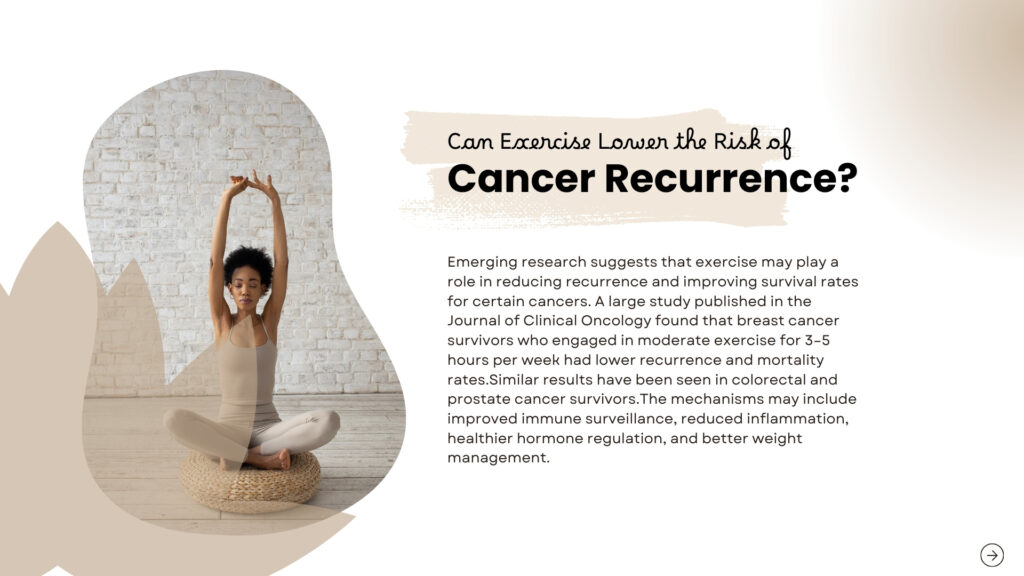
Emerging research suggests that exercise may play a role in reducing recurrence and improving survival rates for certain cancers.
A large study published in the Journal of Clinical Oncology found that breast cancer survivors who engaged in moderate exercise for 3–5 hours per week had lower recurrence and mortality rates.
Similar results have been seen in colorectal and prostate cancer survivors.
The mechanisms may include improved immune surveillance, reduced inflammation, healthier hormone regulation, and better weight management.
While exercise is not a guaranteed safeguard, it is an empowering lifestyle habit that may help extend survivorship and quality of life.
The Emotional and Mental Benefits of Exercise
Beyond physical recovery, cancer survivors often face emotional challenges: fear of recurrence, body image concerns, post-traumatic stress, or depression. Exercise plays a powerful role in addressing these psychological hurdles.
1. Reduces Anxiety and Depression
- Physical activity triggers the release of endorphins and serotonin, the brain’s natural mood boosters.
- Studies show that cancer survivors who exercise regularly report lower rates of depression and anxiety than those who remain inactive.
2. Improves Self-Confidence and Body Image
- Cancer can alter how individuals feel about their bodies—surgery scars, hair loss, weight changes, or physical weakness may lower self-esteem.
- As survivors regain strength and mobility, they often feel more confident, empowered, and in control of their bodies.
3. Provides Stress Relief
- Mindful movement practices like yoga, tai chi, or walking outdoors reduce cortisol (the stress hormone).
- Exercise offers survivors a mental break from constant worry, shifting focus toward growth and healing.
4. Enhances Cognitive Function (“Chemo Brain”)
- Many survivors report difficulties with memory, focus, or processing information after treatment.
- Exercise increases blood flow to the brain, stimulates neuroplasticity, and supports clearer thinking.
5. Builds Community and Support
- Group fitness classes, walking clubs, or cancer-specific exercise programs create a sense of belonging.
- Survivors gain encouragement from peers who understand their struggles, reducing isolation.
Types of Exercise for Cancer Recovery
Not all exercises are suitable for every survivor. The best program depends on cancer type, treatment side effects, age, and overall fitness. However, experts generally recommend a mix of aerobic activity, strength training, flexibility exercises, and mind-body practices.
1. Aerobic Exercise
- Examples: Walking, cycling, swimming, light jogging, dancing.
- Benefits: Improves cardiovascular endurance, reduces fatigue, boosts mood.
- Goal: 150 minutes of moderate aerobic activity per week, broken into manageable sessions.
2. Strength Training
- Examples: Resistance bands, light dumbbells, bodyweight exercises (squats, push-ups, wall sits).
- Benefits: Rebuilds muscle mass, prevents bone loss, enhances daily function.
- Goal: 2–3 sessions per week, targeting major muscle groups.
3. Flexibility and Mobility Exercises
- Examples: Gentle yoga, Pilates, stretching, tai chi.
- Benefits: Increases range of motion, reduces stiffness, supports balance and posture.
- Goal: Daily stretching or 2–3 yoga sessions per week.
4. Mind-Body Practices
- Examples: Yoga, meditation with movement, tai chi, qigong.
- Benefits: Lowers stress, calms the nervous system, and improves mental resilience.
- Especially helpful for survivors struggling with anxiety, insomnia, or trauma.
5. Functional Training
- Examples: Step-ups, sit-to-stand exercises, balance drills.
- Benefits: Improves ability to perform daily activities safely and independently.
Safety Considerations: Exercising During and After Cancer
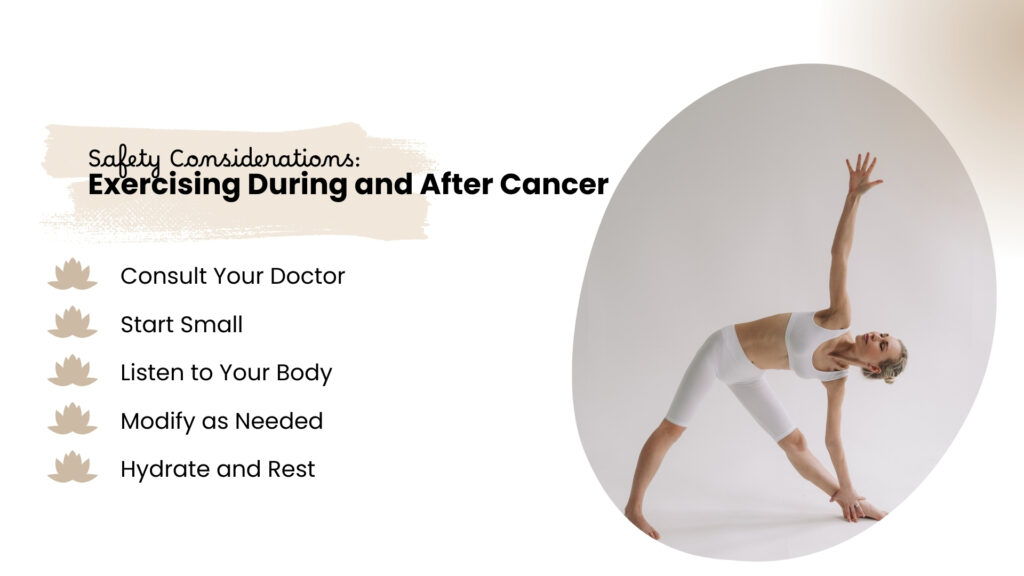
While exercise is highly beneficial, it must be approached carefully. Every survivor’s body is unique, and medical clearance is essential before starting a program.
Safety Tips:
- Consult Your Doctor: Always get medical advice, especially if you have heart conditions, bone metastases, or lymphedema.
- Start Small: Even a 5–10 minute walk is valuable. Gradually build endurance.
- Listen to Your Body: Fatigue, pain, or shortness of breath should never be ignored.
- Modify as Needed: Use chairs for support, resistance bands instead of weights, or water aerobics to reduce joint stress.
- Hydrate and Rest: Balance activity with proper hydration, nutrition, and rest days.
- Watch for Special Conditions:
- Lymphedema: Survivors of breast or gynecologic cancer should start resistance training gradually and monitor swelling.
- Osteoporosis Risk: Avoid high-impact exercises that increase fracture risk.
- Neuropathy: If treatment caused nerve damage, focus on balance and safe movement.
- Lymphedema: Survivors of breast or gynecologic cancer should start resistance training gradually and monitor swelling.
Real-Life Stories of Survivors Using Exercise
Maria’s Story (Breast Cancer Survivor)
After completing chemotherapy, Maria felt drained and disconnected from her body. She started with short daily walks and eventually joined a yoga class. Six months later, not only had her energy improved, but she also felt calmer and more confident facing her follow-up scans.
James’ Story (Prostate Cancer Survivor)
James struggled with weight gain and fatigue after hormone therapy. With guidance from a trainer specializing in cancer recovery, he began light strength training. Over a year, he lost 20 pounds, gained muscle, and reported feeling “like himself again.”
These stories highlight that recovery is not just about surviving, but thriving—and exercise is often the turning point.
How to Stay Motivated
- Set Small Goals: Focus on consistency, not perfection.
- Track Progress: Use a journal or fitness app to celebrate milestones.
- Find Joy in Movement: Choose activities you genuinely enjoy—dancing, gardening, walking in nature.
- Join a Program: Many hospitals and community centers offer cancer-specific fitness programs.
- Celebrate Wins: Every step, stretch, or lift is a victory in recovery.
Final Thoughts: Movement as Medicine
Cancer recovery is not a linear path. Survivors face setbacks, fear, and challenges that extend long after treatment ends. Yet, one truth remains clear: exercise is a powerful ally in healing.
It restores energy, strengthens the body, calms the mind, and rekindles hope. Whether through gentle yoga, daily walks, or strength training, survivors who move consistently often rediscover a sense of control and vitality.
In many ways, exercise is more than physical activity—it is a statement of resilience. It is the survivor’s way of saying: “I am still here. I am still strong. And I am moving forward.”