
There’s a particular hush that used to surround women’s pleasure — the quiet that comes from a room full of secrets, the polite cough before anyone says the words out loud. In 2025 that hush is being replaced by laughter, research, product launches, policy fights, and wardrobe conversations that used to be relegated to bedrooms. This is not a tidy revolution with a single banner; it’s a messy, beautiful cultural shift: sex-positive education, femtech innovation, new scholarship on the “orgasm gap,” the normalization of self-pleasure, and an increasingly intersectional movement that insists pleasure is a human right and not a punchline.
This long-form piece digs into how we got here, what’s changing now (and why), and how women and communities can translate newfound ideas into safer, healthier, and more satisfying sexual lives. Expect history, hard facts, cultural analysis, clear practical advice, and a forward-looking lens — because redefining female pleasure is not only personal, it’s political, technological, and social.
A short primer: why words matter
When we talk about “female pleasure,” we’re doing more than describing a physical experience. We’re naming a set of social realities: access to accurate information, availability of safe tools and healthcare, cultural permission to enjoy sex for its own sake, and the systemic barriers that shape desire and pleasure differently for people based on gender, race, class, disability, and orientation. Calling it “female pleasure” is shorthand that centers people who historically have had their sexual needs minimized, medicalized, or ignored.
Language has power: shame is sustained by euphemism and silence. Replacing those with clear words — “masturbation,” “clitoral stimulation,” “consent,” “orgasm” — breaks the spell that kept many people from learning, exploring, and speaking up.
A little history: shame as infrastructure
Western cultures — and many others — built infrastructures of shame around female sexuality over centuries. These infrastructures weren’t just moral; they were legal, medical, and educational. From Victorian ideals that categorized female sexuality as fragile and domestic, to 20th-century medical frameworks that dismissed women’s pain or misattributed symptoms, institutional practices shaped how women understood their own bodies.
Feminist waves pushed back. The second wave (1960s–80s) demanded reproductive rights and bodily autonomy. The third wave (1990s–2000s) reclaimed sexual agency through both academic and grassroots work. By the 2010s and into the 2020s, sex-positive feminism, online communities, and mainstream streaming content normalized conversations about kink, polyamory, and masturbation like never before. But even with these gains, gaps remained — especially in education, clinical research, and social power dynamics that still privilege male pleasure and ignore structural barriers.
The orgasm gap: a stubborn inequality (and the data behind it)
One of the clearest measurements of inequality in sexual satisfaction is the so-called “orgasm gap” — the consistent finding that men report orgasms more often than women in heterosexual encounters. Multiple studies confirm this gap across age groups and cultures, with various estimates showing a sizable difference in orgasm rates between men and women. A large, recent meta-analysis and related research continue to document this disparity and highlight how persistent it is across life stages. (PMC)
Why does the orgasm gap persist? The reasons are multidimensional:
- Communication deficits: Partners often do not discuss likes, dislikes, or what specific stimulation actually leads to orgasm for a particular person.
- Anatomical misunderstandings: The clitoris — central to most vulvar orgasm — has historically been minimized or ignored in medical teaching and popular culture.
- Performance scripts and heteronormative expectations: Many cultural scripts prioritize penile-vaginal intercourse as the “main event,” sidelining oral sex, manual stimulation, and other routes that are more likely to produce orgasms for many women.
- Education gaps: Sex education that focuses solely on reproduction rather than pleasure leaves people unprepared to pursue sexual fulfillment.
- Power dynamics and sexual coercion: Inequalities in relationships, gendered expectations, and experiences of trauma can suppress sexual agency.
Recognizing the orgasm gap is not a moral finger-wag; it’s a diagnostic tool. It tells us where to focus education, research, and clinical care if we genuinely want sexual equality. The good news: Because the gap is driven by social and informational deficits as much as biology, it’s amenable to change through education, communication, and better healthcare.
Pleasure-inclusive education: the curricular shift
One of the most consequential shifts in the 2020s has been the rising argument for pleasure-inclusive sexuality education. Traditional models often prioritized “risk avoidance”: how not to get pregnant or catch an STI. By contrast, pleasure-inclusive curricula teach sexual agency, bodily autonomy, consent, and communication alongside biology and safety. Emerging research suggests that when young people receive comprehensive, accurate, and inclusive information — including about pleasure and consent — they are more likely to have healthier relationships and better sexual outcomes. International agencies and researchers are increasingly advocating for broader, more holistic programs. (PMC, UNESCO)
Policy is still contested: in many places there’s a political backlash against what opponents label “explicit” or “ideological” content. But advocates argue — and evidence supports — that withholding information actually increases harm. The debate over curricula is now less about whether sex education should exist and more about what form it should take: punitive abstinence-only programs versus programs that treat young people as whole humans with questions about pleasure and consent.
Femtech and sexual wellness: tools of empowerment (and their limits)
Technology and entrepreneurship have turned sexual wellness into one of the fastest-growing corners of health innovation. “Femtech” — an umbrella term for apps, devices, diagnostics, and services aimed at women’s health — has exploded in both investment and product diversity. Market projections in the mid-2020s estimated femtech’s rapid growth trajectory, indicating major investor interest and new consumer-facing products that target fertility, menstrual health, menopause, and sexual wellness. This financial momentum has underwritten research, better products, and mainstream visibility for a market that was previously taboo. (Global Market Insights Inc.)
Sex toys, wellness apps, remote therapy platforms, pelvic floor trainers, and personalized vibrators are now marketed with a language of self-care and empowerment. Yet technology is not a panacea:
- Design bias: Many products are developed by teams that don’t reflect the diversity of users (race, disability, trans and nonbinary experiences).
- Data privacy: Apps that track sexual activity raise sensitive questions about who owns that data and how it could be used.
- Commodification: Not every woman can afford premium devices or subscriptions; access remains uneven.
- Medicalization: Framing pleasure strictly through a biomedical lens can obscure social determinants and relationship dynamics that shape sexual wellbeing.
Smart investment and better regulation could help femtech deliver real benefits: affordable designs, privacy-first data policies, and inclusive research partnerships.
Culture, media, and representation: pleasure as narrative resistance
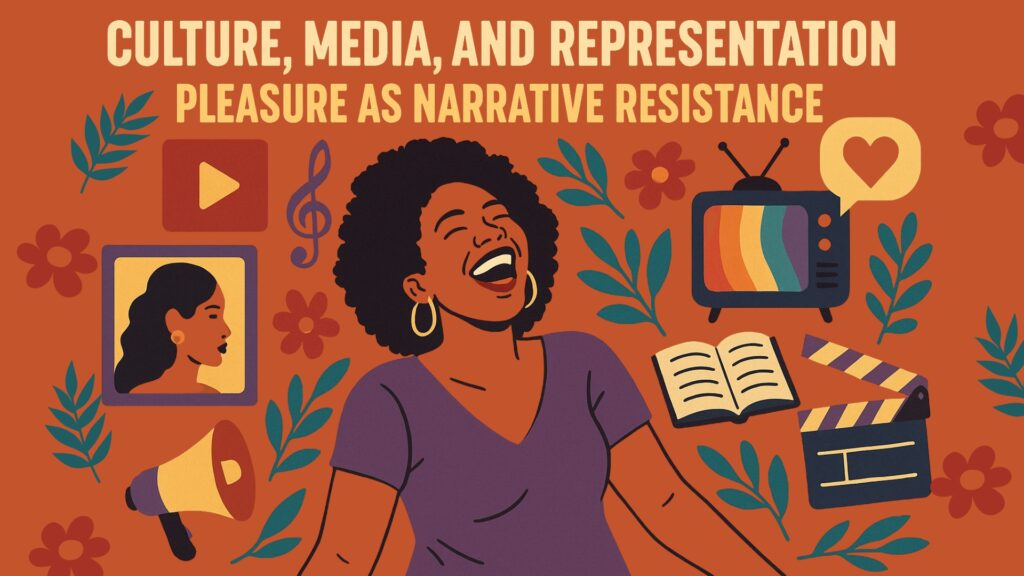
Aesthetic and narrative shifts matter. From memoirs and podcasts to high-profile photo essays and art projects that center sex toys and the people who use them, the story told about female pleasure is changing. When artists and journalists present sex toys and self-pleasure as normal, even radical in places where repression persists, they reshape public perception. Recent cultural work frames sexual autonomy as an act of resistance in contexts where women’s bodies are policed or shamed. Coverage of these cultural moments helps normalize conversations that were once confined to whispers. (The Guardian)
However, representation is uneven. Mainstream media often sanitizes or commodifies pleasure, while subcultural spaces push the boundaries and create actual material change (support networks, safety guidelines, sex worker advocacy). The balance between visibility and exploitation is delicate: the aim must always be to amplify voices of people with lived experience, not to tokenize them.
Consent and communication: the practical pivot
If knowledge is power, communication is the muscle that uses it. Consent culture — a set of practices that center clear, freely given, and enthusiastic agreement — has gone mainstream in a way that would have seemed unlikely twenty years ago. Clear consent practices reduce harm and create the imaginative space for more satisfying sex. But consent alone isn’t sufficient; communication about preference, pace, and pleasure is what converts a safe environment into a pleasurable one.
Practical communication tools:
- Check-ins: “Do you want to try ___?” before attempting a new activity.
- Post-sex debriefs: Brief conversations about what worked and what didn’t.
- Explicit scripts: Simple phrases like “More pressure?” or “Softer?” save future guesswork.
- Nonverbal cues: Agreeing on safe words or physical cues in kink or constrained situations.
Teaching these skills early — in relationships education, in therapy, and in media representation — can move entire cohorts toward better sexual health.
Intersectionality: why pleasure is not one-size-fits-all
Conversations about female pleasure must be intersectional. Race, class, gender identity, disability, religion, and geographic location shape sexual experience in profound ways. For example:
- Women of color may face cultural stigmas and medical biases that complicate access to pleasure-focused care.
- Disabled people may require adaptive devices, accessible education, and integrated healthcare.
- Trans and nonbinary people have unique needs related to surgical outcomes, hormone therapy, and body dysphoria.
An inclusive pleasure movement refuses to uplift one demographic’s experiences as universal. It centers marginalized voices and acknowledges that access to pleasure is frequently blocked by social systems, not individual failure.
Faith, morality, and community: reconciling pleasure and spiritual life
Pleasure isn’t inherently secular. Many people weave spiritual meaning into their sexual lives; faith communities are diverse in how they approach sex. Some conservative faith contexts continue to emphasize restraint or specific relational frameworks; other faith-based groups are leading on compassionate care, pastoral counseling for survivors, and holistic approaches that include sexual wellbeing as part of family health.
Reframing pleasure within values that include mutual respect, fidelity (when chosen), and compassion can create pathways for religious people to engage with sexual wellbeing without abandoning their faith. This is an area where community leaders, pastoral counselors, and health professionals can build bridges, offering accurate information that honors spiritual frameworks while reducing harm.
Practical how-to: translating cultural change into bedroom practice
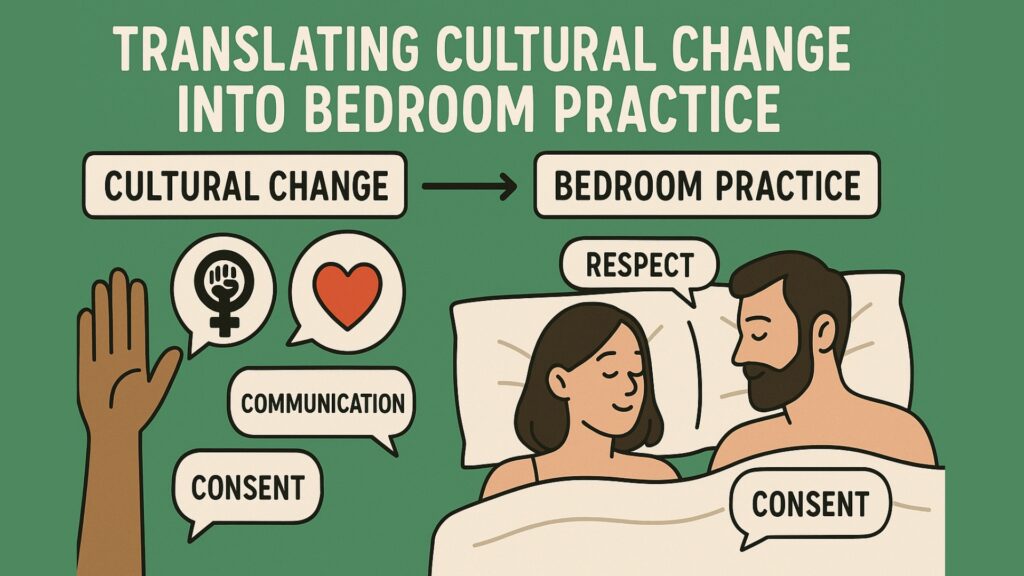
Changing culture won’t magically change your sex life overnight. Here are practical steps — evidence-informed, low-cost, and relationship-friendly — you can start using now.
- Learn your body: Self-exploration is research. Spend time understanding what kinds of touch, rhythm, and pressure bring you pleasure. Solo play is not selfish; it’s an educational act.
- Get anatomy literate: The clitoris has internal and external structures. Learning the basics demystifies common frustrations.
- Talk openly with partners: Share what works. Short, specific feedback is far more effective than vague hints.
- Experiment with tools: Toys can be bridges to new sensations. Start modestly — a small vibrator, a silicone bullet, or a textured sleeve — and prioritize body-safe materials.
- Prioritize foreplay: Too often framed as optional, foreplay increases arousal, reduces pain, and improves compatibility.
- Address health issues: If sex is painful or unfulfilling due to medical causes (vaginal dryness, hormonal changes, vestibulodynia), seek a clinician who listens.
- Consent and retreat: Know your boundaries and be ready to stop or modify if something doesn’t feel right.
- Consider therapy or coaching: Sex therapists and counselors can help when communication or trauma complicate intimacy.
The role of storytelling: memoirs, podcasts, and public testimony
Personal narratives accelerate cultural change. Podcasts that center women’s sexual stories, memoirs about reclaiming desire, and public art projects that depict sex toys as normal objects all chip away at stigma. These stories make the private public in a way that humanizes and educates simultaneously — they change what is socially intelligible and permissible to talk about.
Responsible storytelling lifts the voices of marginalized communities and resists sensationalizing trauma. Consent for telling sexual stories matters too: survivors and storytellers must be empowered on their terms.
Policy and politics: the tug-of-war over education and rights
The move toward pleasure-inclusive curricula and better sexual healthcare has political pushback. Legislative battles over what can be taught in schools, how reproductive health is funded, and whether sex education includes LGBTQ+ perspectives are ongoing in multiple countries. Policy outcomes will shape the next generation’s sexual literacy.
Advocates press for evidence-based approaches — because the data shows that comprehensive, medically accurate education reduces harm and supports healthier relationships. Public health arguments are persuasive: happier, safer sexual lives are a community benefit.
Looking ahead: what might the decade bring?
The next five to ten years could produce meaningful gains if three trends continue:
- Normalized education: If more jurisdictions adopt pleasure-inclusive sex ed, cohorts of young people will enter adulthood with better communication and safer practices.
- Responsible femtech: If product development centers inclusivity and privacy, femtech can broaden access to tailored solutions rather than deepen divides.
- Care-centered culture: If healthcare systems and communities treat sexual wellbeing as part of general health — not a luxury — we’ll see better clinical outcomes and fewer dismissals of sexual concerns.
A final invitation: from shame to sensation
Redefining female pleasure is a collective project: it happens in bedrooms and clinics, in classrooms and legislatures, in boardrooms and community centers. It’s about anatomy and politics, intimacy and economics, vulnerability and delight.
If you’re reading this and want to be part of the change, here are small, concrete next steps:
- Start one conversation about pleasure with a partner, friend, or community group.
- If you’re a parent or educator, seek out comprehensive, age-appropriate resources about consent and anatomy.
- If you’re a clinician, read up on the latest research about sexual wellbeing and consider integrating basic pleasure-focused communication into care.
- If you’re a technologist, prioritize privacy, inclusivity, and user testing with diverse populations.
- Support artists, journalists, and creators who responsibly amplify marginalized sexual narratives.
Pleasure is not frivolous. It’s tied up with dignity, mental health, and the ability to form joyful, equitable relationships. Moving from shame to sensation is both a celebration and a program of repair. It asks us to be curious about our bodies, brave in our conversations, and committed to social changes that make pleasure safer and more available for everyone.